AI Brand Visibility: How to Measure and Improve It
A practical guide to the metrics that measure AI brand visibility, how to track it across ChatGPT, Perplexity, Gemini, and Google AI Overviews, and how to improve it.


TL;DR: AI brand visibility is how often, and how prominently, AI engines like ChatGPT, Perplexity, Gemini, and Google AI Overviews name and cite your brand versus your competitors when people ask about your space. You measure it with a small set of answer-level metrics, mentions, citations and sources, share of voice, and sentiment, tracked on a schedule. You improve it by studying the sources those engines already cite and becoming one of them: earning third-party mentions, publishing answer-first content, and keeping your presence consistent across the web.
What AI brand visibility is
AI brand visibility is how often and how prominently AI engines name and cite your brand, relative to competitors, when people ask them about your space. There is no ranked list of ten links inside an AI answer, just a few brands named and a few sources cited, so visibility here means presence in the answer itself, not a position on a results page.
If you want the full definition and how it differs from a Google ranking, we cover that in what AI visibility is. This guide is about the practical part: the metrics that measure your brand's presence, how to track them, and how to move them.
Why AI brand visibility matters
Search is moving from a list of links to a single written answer. When that answer names three brands and cites three sources, the brands left out are invisible for that query, no matter how well they rank in the classic blue-link list. That is the shift generative AI has forced on brand visibility: presence is now decided inside the answer, before the user ever sees a link.
- The click is disappearing. More searches end inside the AI answer with no visit to any site. If the answer does not name you, you were never in the consideration set.
- A citation carries the engine's trust. Being named and cited inside an answer reads as an endorsement, not a link the user still has to weigh. That is worth more than a position most people now scroll past.
- Your competitors are already being named. For most commercial topics some brands show up in AI answers and others do not, and the gap compounds, because engines lean on sources they have cited before.
- It is early, and measurable. Most companies are not tracking this yet. Knowing which prompts name you, and which name a competitor instead, is the difference between guessing and acting.
That last point is why tracking AI brand visibility is worth doing now rather than later: the brands that measure and act while the space is uncrowded shape which sources the engines learn to trust.
AI brand visibility vs traditional brand visibility
Traditional brand visibility asks how often people see your brand, across ads, search results, social, and press. AI brand visibility narrows that to a specific, high-stakes surface: the generated answer. The difference changes what you measure and how you win it.
| Traditional brand visibility | AI brand visibility | |
|---|---|---|
| Where it happens | Ads, blue-link search, social feeds, press | Inside AI answers from ChatGPT, Perplexity, Gemini, Google AI Overviews |
| The unit | Impressions, rankings, reach | A mention or citation inside a generated answer |
| The question | "How often is my brand seen?" | "Am I named and cited when someone asks about my space?" |
| What wins it | Spend, rankings, PR volume | Being a trusted, quotable source the engine cites, and being mentioned across the web |
| How you measure | Impressions, share of search, follower counts | Mentions, citations, share of voice, sentiment across tracked prompts |
The two overlap. The same reputable coverage and well-structured pages that build traditional visibility are often what an engine leans on to decide whom to name. But a strong classic presence no longer guarantees you appear: an AI Overview can answer above your top-ranked link, cite three competitors, and never mention you.
The metrics that measure AI brand visibility
Because there is no ranking, you measure AI brand visibility with a small set of answer-level metrics. Each one answers a different question.
- Mentions. How often an engine names your brand across the prompts you track. The baseline: are you in the answer at all.
- Citations and sources. Which exact domains and URLs the engine pulled from to build the answer. This is the most actionable metric, because it tells you what content earns a place in the answer, not just whether you made it.
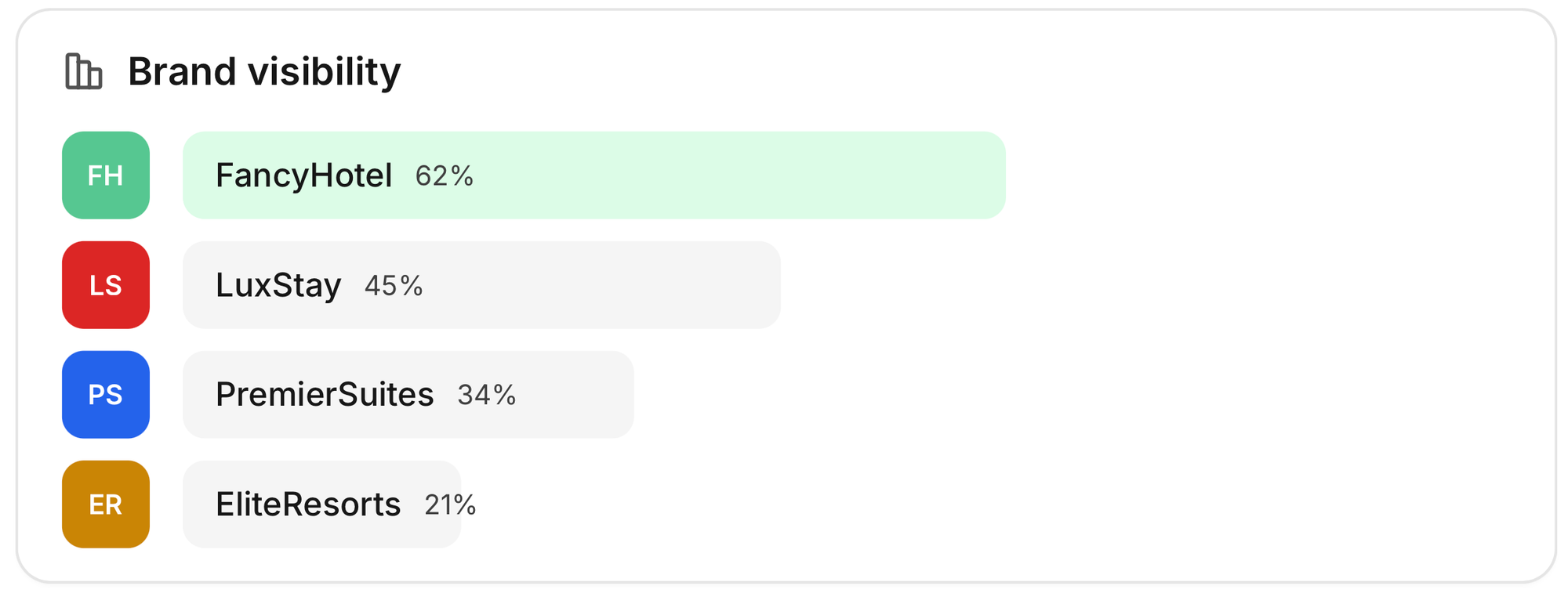
- Share of voice. How often you appear versus named competitors across the same prompts. Presence is relative, and share of voice turns it into a number you can move.
- Sentiment. The context you are named in, positive, neutral, or negative, where the engine's framing can be assessed.
- Mention position. When several brands are named, whether you are the first, second, or third the engine reaches for, a prominence signal on top of raw presence.
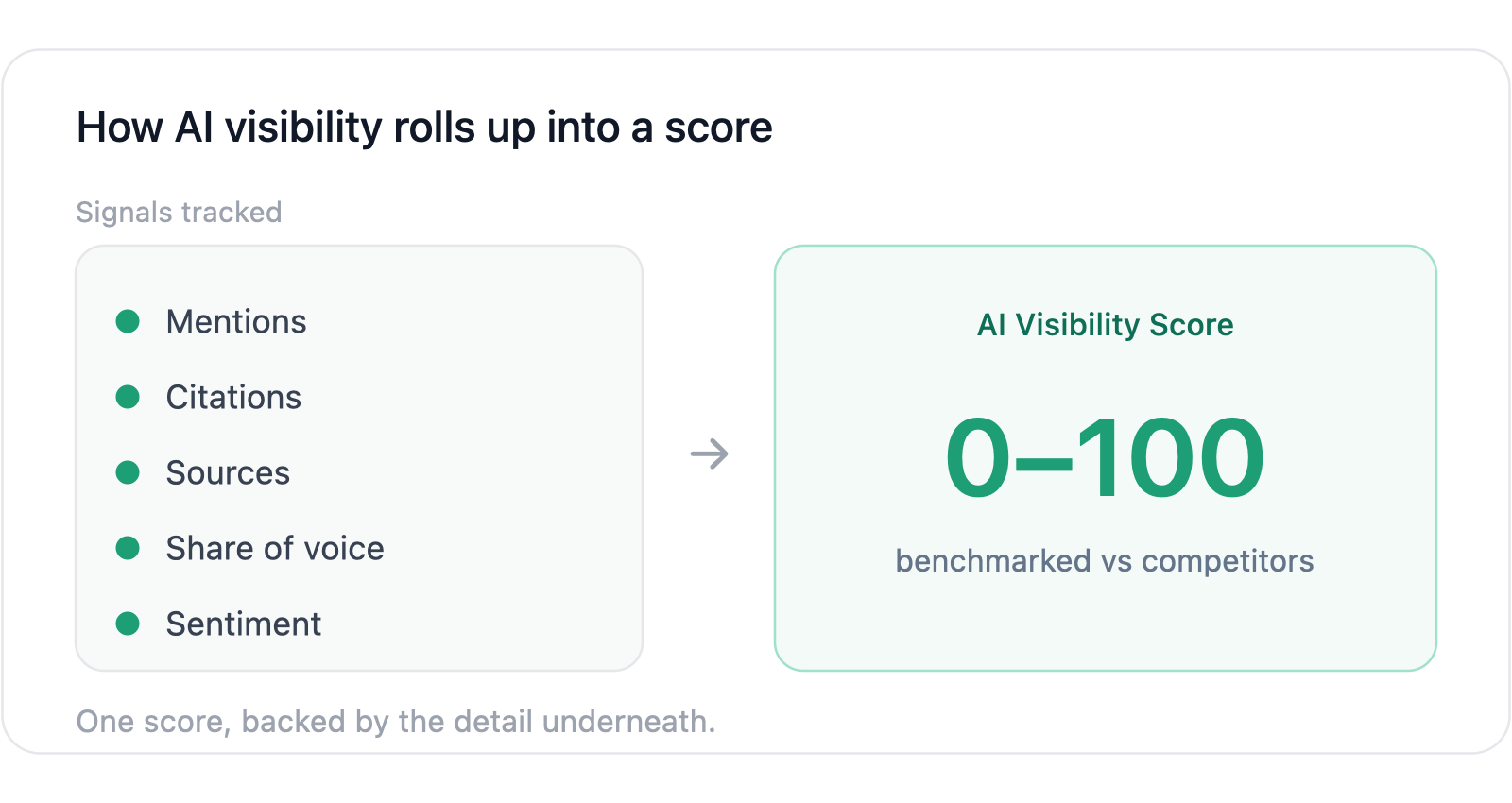
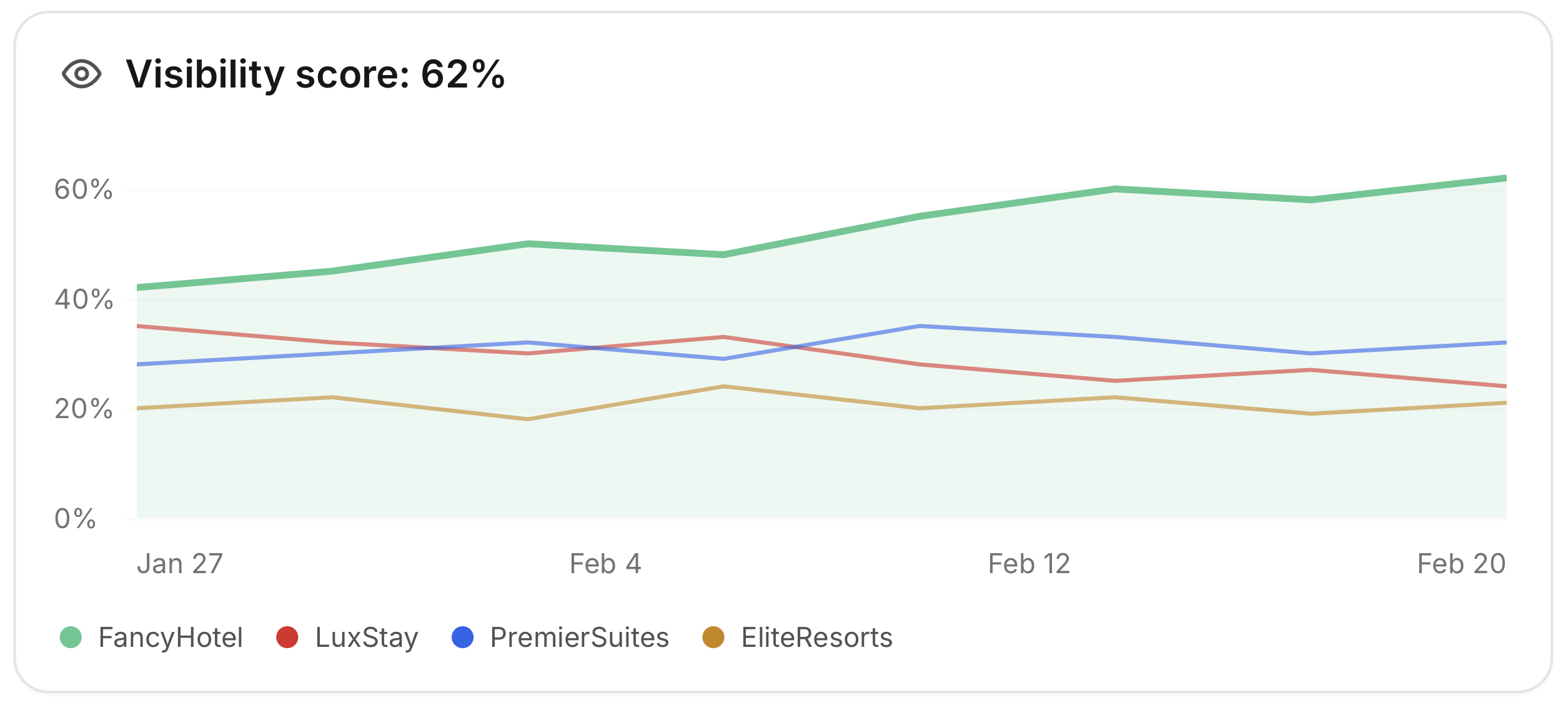
- AI Visibility Score. Most tools roll these signals into a single 0-to-100 number so you can read overall direction at a glance. Treat it as the headline and the mention, citation, and source detail underneath it as the part you act on.
How to monitor brand visibility in AI, step by step
You monitor AI brand visibility the way you monitor anything in search: decide what to ask, ask it on a schedule, and record what comes back.
- List the prompts your buyers actually ask. Not your brand name, the questions, the "best tool for X", "how do I do Y", "alternatives to Z" prompts where you want to be named. These are your tracked prompts.
- Pick your competitive set. Choose the two to five brands you expect to appear alongside, so share of voice has something to measure against.
- Run the prompts on a schedule. Answers vary run to run, so a single check is a snapshot, not a trend. Weekly or monthly runs turn noise into a direction.
- Record mentions, citations, share of voice, and sentiment. For each prompt, log whether you were named, which sources the engine cited, where you sat against competitors, and how you were framed.
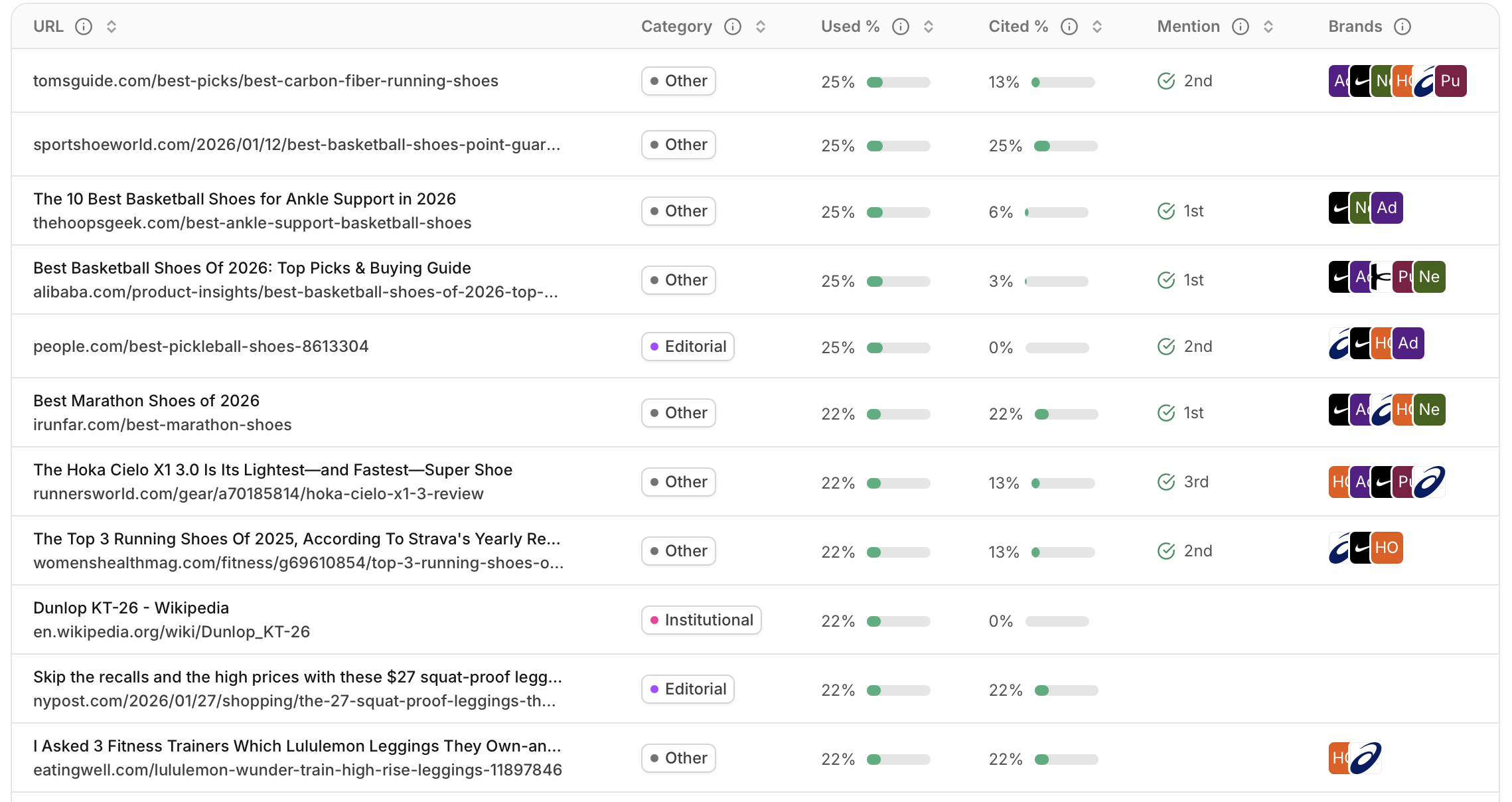
- Read the source pages, not just the score. The score tells you that you are losing a prompt. The cited sources tell you why, and what to publish or earn to change it.
That fifth step is where most tracking stops short. Seeing the exact pages an engine cited for a prompt, and your brand's mention position in the answer, is what turns a metric into a to-do list.
Where to track AI brand visibility
Track where your buyers actually ask. The engines behave differently, so a brand can be strong in one and absent in another, which is why a per-engine read matters more than a single blended number.
- ChatGPT drives much of the AI-answer behavior today and is where most brand-versus-brand comparisons get asked. See the ChatGPT visibility tracker.
- Perplexity leans heavily on citations, so the source pages it pulls are unusually visible and worth studying.
- Gemini and Google AI Overviews put AI answers in front of Google's search audience, so presence there overlaps with your classic SEO footprint. See the Gemini and Google AI Overviews trackers.
- Google AI Mode is newer and lower volume, with more educational-intent queries, but it is worth watching as it grows. See the Google AI Mode visibility tracker.
How to improve brand visibility in AI answer engines
Improving AI brand visibility is not a separate discipline from good marketing. It is the same work, pointed at the prompts you are losing and the sources the engines cite.
- Start from the prompts you are losing. Take the tracked prompts where a competitor is named and you are not. That is your target list, in priority order.
- Study the sources the engine cites. For each losing prompt, look at the exact pages the engine pulled from. That tells you what kind of content, and whose, earns the citation.
- Earn third-party mentions. Being named on pages the engine already trusts, reviews, "best" lists, and reputable coverage, is one of the strongest signals that you are an answer to the question. This is where digital PR and earned media do real work.
- Publish answer-first, quotable content. Lead with the answer, keep sections self-contained, add specific facts and comparisons, and structure with clear headings, FAQ blocks, and tables. Models lift clean, structured answers more readily than prose buried under a long wind-up.
- Keep your presence consistent and current. Consistent brand details across the web, and pages that stay updated, make you easier for an engine to recognise and reuse. Make sure your content is technically reachable by the AI crawlers so it can be read at all.
- Re-run and repeat. Track the same prompts again, watch whether your mentions and share of voice move, and feed the winners into the next round.
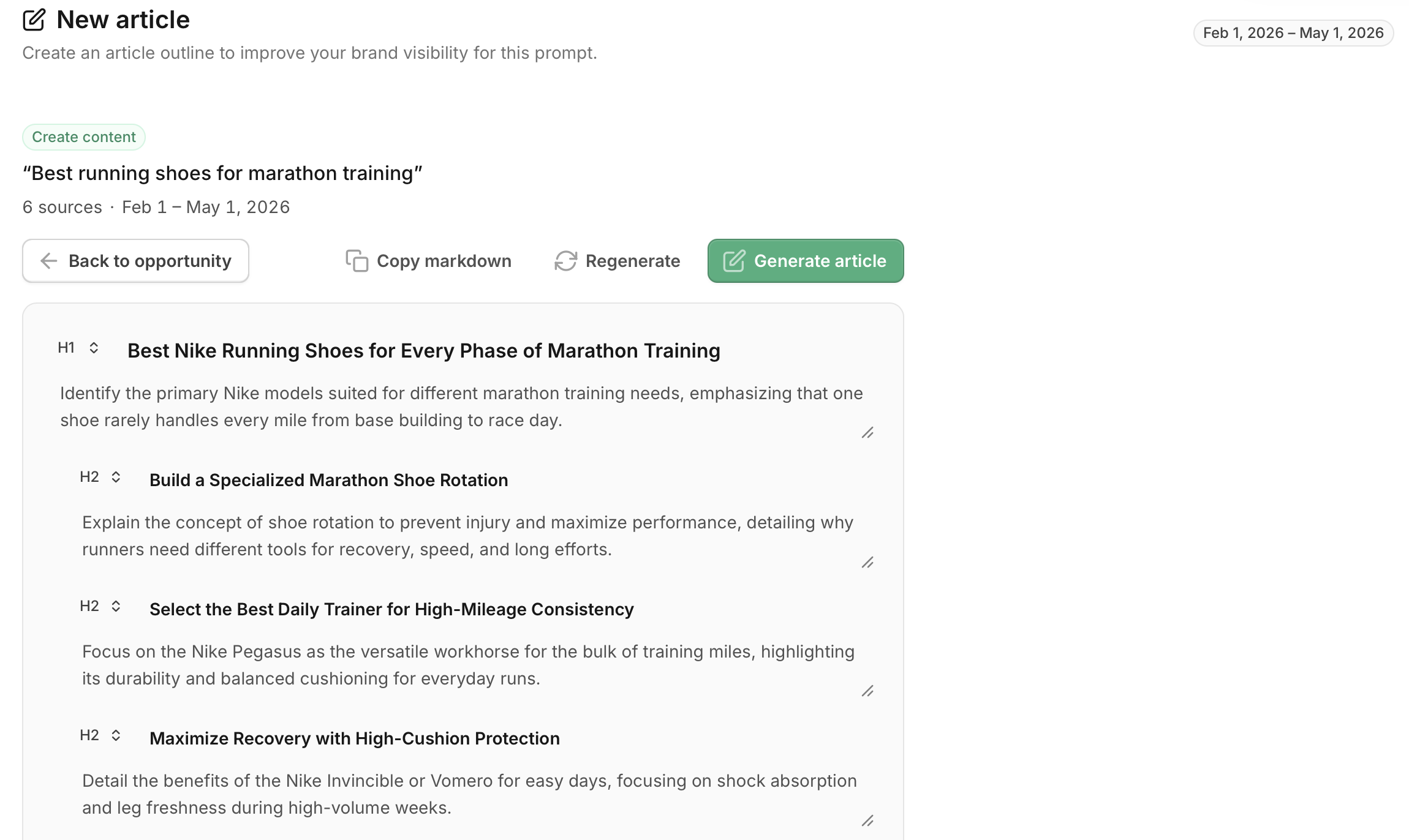
How AllSearch tracks AI brand visibility
Tracking AI brand visibility works on the same principle as rank tracking: run your prompts on a schedule and record the result. The difference is what you record. Instead of a position, you watch mentions, citations, share of voice, and sentiment. This is what an AI visibility tracker does.
AllSearch tracks this across ChatGPT, Perplexity, Gemini, Google AI Overviews, and Google AI Mode, gives you an AI Visibility Score benchmarked against competitors, and, the part most tools skip, shows the exact sources AI cites for every tracked prompt, with your brand's mention position in the answer. From there the work mirrors classic SEO: find the prompts you are losing, study the sources the engine cites, and close the gap with an AEO content strategy so you become one of the sources it trusts.
See where your brand stands
AI brand visibility is the new "do we show up." The search still happens, the answer still names a few brands, and being one of them, ahead of your competitors, is the whole game. The brands that measure it now, and act on which sources the engines cite, are the ones the engines will keep citing.
Get a free AI visibility report in under 60 seconds after a short setup, no guesswork about whether ChatGPT and Google AI Overviews name you or your competitors. Start your free AI visibility report.
Frequently asked questions
What is AI brand visibility?
AI brand visibility is how often and how prominently AI engines name and cite your brand, relative to competitors, when people ask them about your space. Instead of a ranking position, it measures presence inside the generated answer: whether ChatGPT, Perplexity, Gemini, or Google AI Overviews mention you, which sources they pull from, and how you compare to the other brands named.
Why should I track AI brand visibility?
Because more searches now end inside an AI answer that names only a few brands. If a competitor is named for a prompt and you are not, you are invisible for that query no matter how well you rank in classic search. Tracking it tells you exactly which prompts you win, which you lose, and to whom, so you can act instead of guess.
How do you measure AI brand visibility?
You run the prompts your buyers ask, on a schedule, and record what the engines return: how often you are mentioned, which sources they cite, your share of voice against competitors, the sentiment of the mention, and where you sit when several brands are named. Most tools also roll these into a single 0-to-100 AI Visibility Score for direction at a glance.
How do I check if my brand shows up in ChatGPT?
You can spot-check by asking ChatGPT the questions your buyers ask and noting whether it names you, though answers vary run to run. For a consistent read across ChatGPT and the other engines, AllSearch generates a free AI visibility report in under 60 seconds after a short setup, showing whether each engine mentions and cites you.
How often should I monitor AI brand visibility?
Weekly or monthly for most brands. AI answers vary between runs, so a single check is a snapshot, not a trend. A regular schedule smooths out the noise and shows whether your mentions and share of voice are actually moving.
How do you track brand visibility in Google AI Mode?
The same way as any other engine: run your tracked prompts against it on a schedule and record whether you are named and cited. Google AI Mode is newer and lower volume than the others, with more educational-intent queries, so treat it as one to watch as it grows rather than your primary surface today.
How is AI brand visibility different from AI visibility?
They are the same underlying idea. AI visibility is the general term for how often AI engines name and cite you; AI brand visibility simply frames it around a specific brand and its competitive set. The metrics, mentions, citations, share of voice, and sentiment, are identical.
How do I improve my brand's visibility in AI answers?
Start from the prompts where competitors are named and you are not, and study the sources the engine cites for them. Then earn third-party mentions on the pages engines already trust, publish answer-first content structured with clear headings and tables, keep your brand details consistent across the web, and re-run the prompts to see what moved.